


Bible Studies
Saint Peter's Episcopal Church in Arlington, VA offers two welcoming weekly Bible studies open to anyone who wants to explore Scripture in community. Whether you're new to the Bible or have been reading it for decades, you'll find an honest, unhurried space to ask questions, listen, and grow.
Saint Peter’s Six-Week Bible Reading Challenge
A Light Unto Our Path
November 1 – December 6, 2026
Our hope is to have 100 unique readers – about half our normal Sunday attendance – complete at least one challenge. If you’ve been wanting to read more scripture but didn’t know where to start or if you’ve been hoping to build a regular practice of scripture reading into your routine, this challenge can help you begin.
-
Introduction
Dragons, beasts, thrones, and visions have puzzled Bible readers for thousands of years. Daniel and Revelation include traits from the genre of apocalypse, books written for people under pressure with a message that the empire in front of them isn’t the last word. Daniel opens with stories before the visions begin, and Revelation goes straight in.
What to Read
Daniel OR Revelation
Length (card back)
12-22 Chapters
Length line (card front)
12-22 Chapters
-
Introduction
Midwives who defy Pharaoh, a woman who hides spies, a judge who leads an army, a mother who won’t take no for an answer. Women, some named and some anonymous, play pivotal roles in God’s unfolding story by stepping into the narrative and changing where history goes.
What to Read
Genesis 24-27 (Rebekah)
Exodus 1:8-20 (Midwives and Daughters)
Joshua 2 (Rahab)
Judges 4-5 (Deborah and Jael)
2 Samuel 20 (Wise Woman of Abel)
2 Kings 4:8-37, 8:1-6 (the Shunammite)
Length (card back)
10 Chapters
Length line (card front)
10 Chapters
-
Introduction
Walls fall, seas part, giants lose, and 300 soldiers take on an army armed with trumpets and clay jars. These are stories about people with few good options and a God who shows up anyway. They’re great stories for younger Christians and for reading aloud together.
What to Read
Exodus 14
Joshua 6
1 Samuel 17
Daniel 3
Daniel 6
Judges 6-7
Length (card back)
7 Chapters
Length line (card front)
7 Chapters
-
Introduction
Mark is the shortest Gospel in the Bible and moves at a sprint, with Jesus always on his way to the next healing, debate, or crisis. It’s widely through to be the earliest canonical Gospel written, so you’re reading a text that the other Gospel writers built on. You can finish it in about 45 minutes.
What to Read
The Gospel of Mark
Length (card back)
16 Chapters
Length line (card front)
16 Chapters
-
Introduction
Easter has happened, Jesus has ascended, and a handful of nervous followers have to figure out what comes next. Acts follows these early Christians through sermons, jailbreaks, riots, and a shipwreck as a small group becomes a movement across the Roman world. It’s the story of how the church got started and why it looks the way it does.
What to Read
The Acts of the Apostles
Length (card back)
28 Chapters
Length line (card front)
28 Chapters
-
Introduction
Short, sharp sayings about money, work, friendship, anger, and the words that come out of our mouths. Proverbs doesn’t need to be read in order, but one chapter at a time over six weeks is a good pace. You’ll probably end up quoting a line or two in your daily conversations.
What to Read
The Book of Proverbs
Length (card back)
31 Chapters
Length line (card front)
31 Chapters
-
Introduction
The “minor” in Minor Prophets refers to the length of these books, not their importance. They’re short, vivid collections of poetry, and warning. They’re explorations of hope about justice, mercy, and what faithfulness looks like. Choose two. A short pair makes a light read; a longer pair is a deep dive.
What to Read
Any two of:
Hosea (14)
Joel (3)
Amos (9)
Obadiah (1)
Jonah (4)
Micah (7)
Nahum (3)
Habakkuk (3)
Zephaniah (3)
Haggai (2)
Zechariah (14)
Malachi (4)
Length (card back)
3-28 Chapters (length in parentheses)
Length line (card front)
3-28 Chapters
-
Introduction
These are two complete stories you can read in one sitting. In Esther, a queen risks everything to save her people in a story where God is never explicitly referenced. In Jonah, a reluctant prophet runs in the wrong direction and ends up inside a great fish. Jonah is great for reading aloud with kids; parents may want to preview Esther’s content to determine if it fits with their kids’ developmental level.
What to Read
Esther OR Jonah
Length (card back)
4-10 Chapters
Length line (card front)
4-10 Chapters
-
Introduction
In these five stories, a child is among the most pivotal characters. A boy hears his name called in the dark, a servant girl points a powerful general toward the prophet who can heal him, and the kids that the grown-ups try to wave off are the ones Jesus calls over. A twelve-year-old holds his own with the temple teachers, and a boy’s lunch feeds a crowd. These stories are great for kids and short enough to read in one sitting.
What to Read
1 Samuel 3
2 Kings 5:1-19
Mark 10:13-16
Luke 2:41-52
John 6:1-15
Length (card back)
5 short readings (~ 2-3 chapters)
Length line (card front)
5 Short Readings
-
Introduction
Real letters written to real communities. Reading them is a bit like hearing one side of a phone call. They’re practical and direct, with advice on how we talk, treat each other, handle suffering, and show love. Each one can be read in a single sitting.
What to Read
James
1 Peter
1 John
Length (card back)
15 Chapters
Length line (card front)
15 Chapters
-
Introduction
This challenge is about rhythm and habit-building, not content. Read or listen to scripture for 10 minutes a day for 14 days. What you read is your choice. The goal is to build a practice that you can sustain after the reading challenge ends.
What to Read
Your choice, read or listen
Length (card back)
10 minutes a day for 14 days
Length line (card front)
Time-Based
-
Introduction
These are stories about how a family became a people who became a nation. Joseph is a favored son sold by his brothers who ends up in a palace, and Exodus is the story of how his ancestors make a slow, dramatic walk from slavery to freedom. Pick one and see how it ends.
What to Read
Genesis 37-50 OR Exodus 1-15
Length (card back)
14-15 Chapters
Length line (card front)
14-15 Chapters
-
Introduction
Encounter Jesus in his own words: the Sermon on the Mount, the Lord’s Prayer, the Good Samaritan along with the lost sheep, lost coin, and prodigal son. These are some of the most quoted and studied teachings in history. Consider reading then straight through to see what stands out.
What to Read
Matthew 5-7
Luke 10-15
Length (card back)
9 Chapters
Length line (card front)
9 Chapters
-
Introduction
Two Gospels tell the birth of Jesus but they do so in very different ways. The nativity scene on your mantel is a blend of both. Luke gives you Mary and Elizabeth, an angel, shepherds, and an older couple who recognize the baby on sight. Matthew gives you Joseph’s dreams, visitors who follow a star, and a family forced to flee. Read them side by side and notice what each one includes or leaves out. If you’re reading as a family, be aware that Herod’s cruelty in Matthew 2 is part of the story and may be hard for little listeners.
What to Read
Matthew 1-2
Luke 1-2
Length (card back)
4 Chapters
Length line (card front)
4 Chapters
-
Introduction
Most of us have a book of the Bible we’ve never opened either for lack of opportunity or intentional avoidance. Pick one you’ve never read, any book and any length, and read it from start to finish.
What to Read
Your choice
Length (card back)
Varies
Length line (card front)
Any Book, Any Length
Wednesday Morning Bible Study
Wednesdays at 10:00 AM | The Meeting Room | Led by the Rev. Lauren Banks
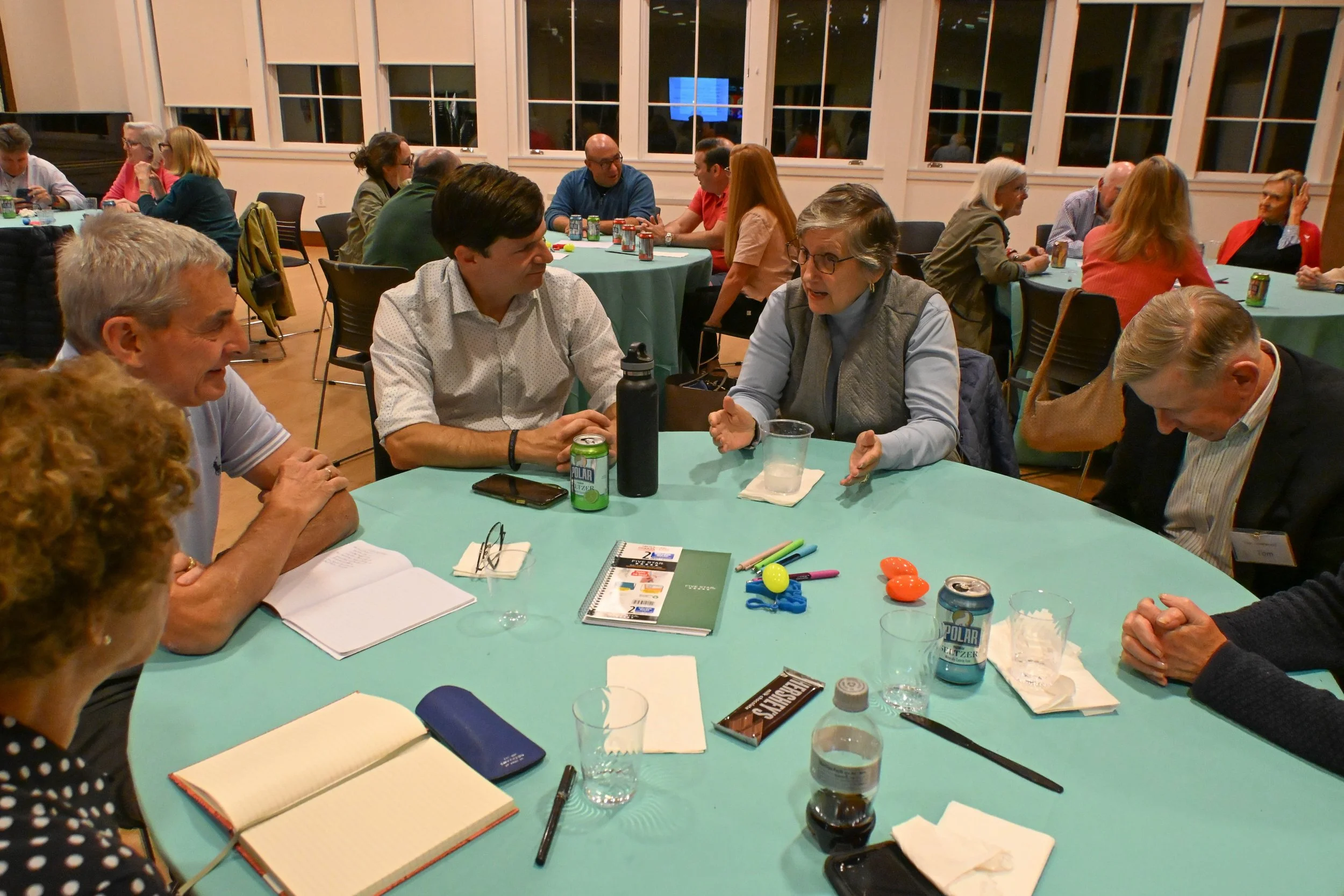
Our midweek Bible study gathers each Wednesday morning for scripture reading, reflection, and conversation. The group follows a lectionary-based rhythm, exploring the passages that shape our worship and common life. There's no preparation required and no prior Bible knowledge assumed. Come as you are. Bring your questions — they're welcome here.
What To Expect
Each gathering begins with a brief prayer, moves into reading the text together, and opens into conversation guided by Rev. Lauren.
The tone is informal and exploratory — more roundtable than classroom. Sessions typically run about an hour. New participants are welcome any week. You don't need to sign up in advance — just show up.
Parents Thursday Morning Bible Study
2nd and 4th Thursdays at 10:00 AM | Led by the Rev. Jenifer Gamber
Parents gather to read Scripture together, ask honest questions, and pray for one another. We will read the story of God and God's people, starting at the beginning and making our way through the entire sweep of the salvation narrative.
Please use the button below to let the Rev. Jenifer Gamber know that you are interested in attending the parent Bible study on the 2nd and 4th Thursdays when your schedule allows.
We understand parents have very busy schedules, so there is no commitment to attending every gathering. Please feel free to attend only when you are able.
More Ways to Engage in Scripture at Saint Peter’s
Bible study at Saint Peter's isn't limited to Wednesday mornings. Scripture also shapes our Sunday Adult Forums, our formation programs for children and youth, and our seasonal offerings during Lent and Advent.
Come for Bible study every Sunday morning at 9:00 a.m., June-August.
If Wednesday mornings don't work for your schedule, there's likely another on-ramp.
Come Find Your Place
Saint Peter's is an Episcopal church in Arlington, VA. We are a community of people at many different stages of faith — curious, questioning, and committed to following Jesus together. If you'd like to know more before you come, we'd love to hear from you.